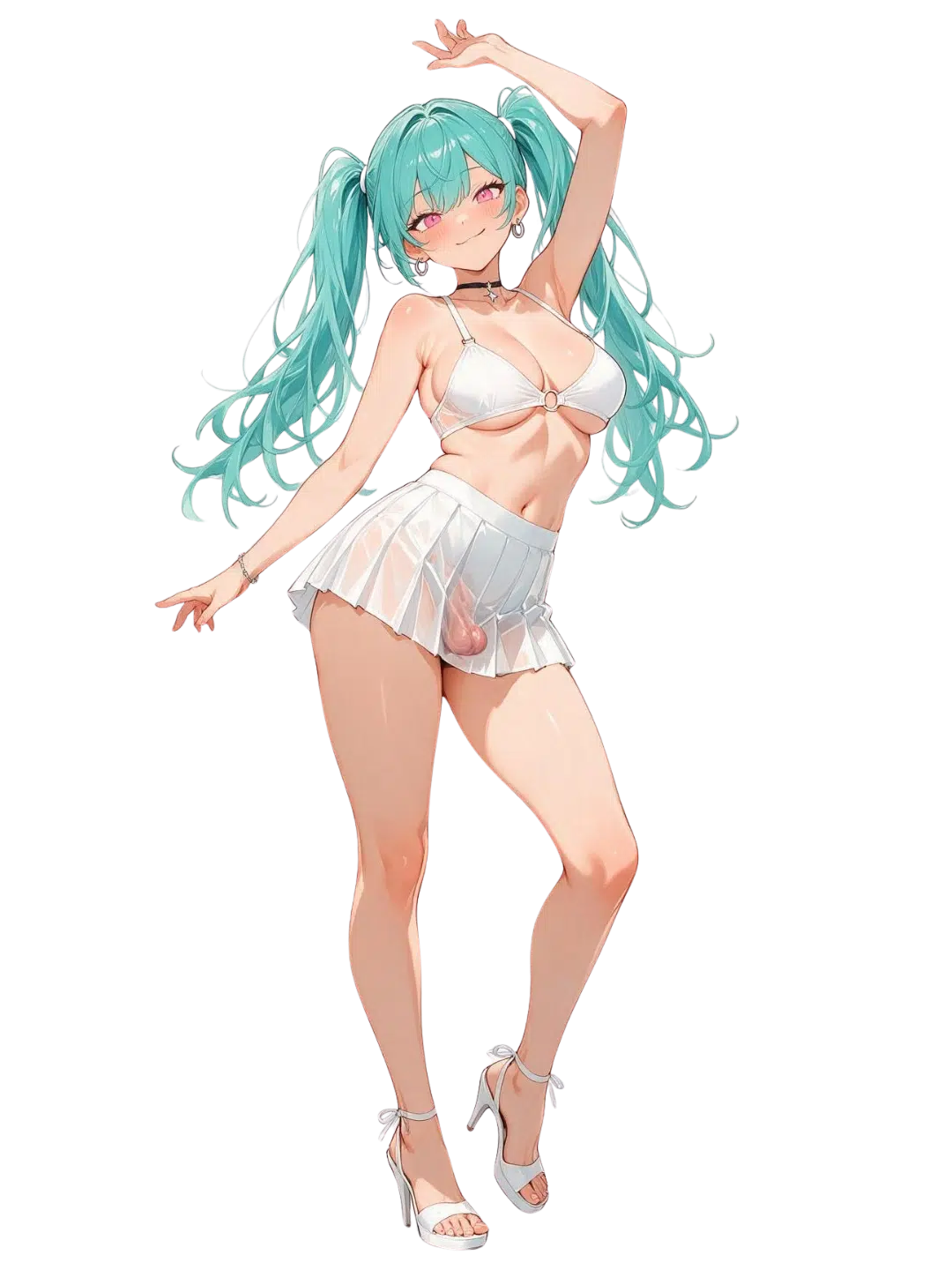
If you’ve spent time around anime, manga, or AI character communities, you’ve probably come across the term AI futanari. The concept has moved from traditional illustrated media into AI-generated art, where creators can design original fictional adult characters with highly customized appearances and personalities. A futanari AI generator can make this process considerably easier. Instead of drawing every detail manually, you can describe a character, choose an artistic style, use reference images, and generate variations until the design matches your idea.
But creating a good AI futanari character isn’t simply about pressing a generate button. Character consistency, prompt quality, visual style, privacy, and platform policies all matter.




What Is AI Futanari?
AI futanari refers to AI-generated fictional characters based on the futanari fantasy trope commonly found in anime, manga, games, and adult-oriented illustrated media. The Japanese term futanari has historically had broader meanings connected with duality or two forms, while its modern use outside Japan commonly refers to a fictional character combining feminine and masculine sexual characteristics.
In AI art communities, AI futanari generally describes generated artwork featuring fictional adult characters based on this fantasy concept. The distinction between the fictional character trope and real-world intersex people is important. Futanari is primarily a fictional media category, rather than a medical or identity term.
AI Futanari vs. Real-Life Intersex People
These concepts shouldn’t be treated as interchangeable. Futanari is a fictional character concept used in creative media. Intersex, meanwhile, describes naturally occurring variations in sex characteristics in real people. An AI character can therefore be designed according to fictional conventions that don’t correspond directly to real human anatomy.
This distinction is useful when discussing AI-generated characters because it keeps the conversation focused on fictional character design rather than making assumptions about real people.
Why Is AI Futanari Becoming Popular?
AI image generation has made highly customized character creation much more accessible. Previously, creating a detailed character usually required drawing skills, commissioning an artist, or spending considerable time learning digital illustration. With generative AI, creators can start with a description and experiment with different concepts much faster.
A single character idea can become:
- Anime-style artwork
- Fantasy character art
- Digital illustrations
- Character portraits
- Full-body designs
- Different outfits
- Different environments
- Alternative hairstyles
- Multiple artistic styles
- Character concept sheets
Current guides focused on futanari AI increasingly emphasize character consistency rather than simply generating individual images. The challenge is making the same fictional character remain recognizable across multiple generations.
What Is a Futanari AI Generator?
A futanari AI generator is an AI image-generation tool that can create artwork based on prompts describing fictional adult characters fitting the futanari concept.
Depending on the platform, the generator may offer:
- Text-to-image generation
- Image-to-image generation
- Character references
- Style selection
- Image editing
- Character consistency
- Multiple image variations
- Image-to-video features
Not every AI generator supports the same content. Some platforms are designed for general-purpose artwork, while others specialize in mature fictional character creation. Before using any service, check its current content policies and terms.
Choose your perfect AI Futanari


Sweet on stage, complicated off it. Yuki needs someone real in a world full of fake s… Sweet on stage, complicated off it. Yuki needs someone real in a world full of fake smiles — maybe that is you.


Cool on the outside, fiercely loyal underneath. Zara doesn't open up easily — but onc… Cool on the outside, fiercely loyal underneath. Zara doesn't open up easily — but once she does, she's yours completely. Expect long silences, soft purrs, and a protectiveness that catches you off guard.

Flirty, tempting, and always ready to leave you wanting more.
How to Create an AI Futanari Character
Creating a recognizable character is easier when you separate the process into several stages.
1. Start With the Character Concept
Before writing a prompt, decide what your character actually looks like.
Think about:
- Age — make the character clearly an adult
- Hair color
- Hairstyle
- Eye color
- Skin tone
- Body type
- Clothing
- Personality
- Setting
- Art style
You don’t need a complicated backstory.
A simple concept might be:
“A confident adult fantasy character with long silver hair, violet eyes, an elegant black-and-purple outfit, and a mysterious personality.”
This gives the model a foundation without overloading the prompt.
2. Choose an Artistic Style
The style can completely change the result.
Anime
Anime-style generation is particularly natural for futanari-inspired fictional characters because the concept has strong connections to anime and manga culture.
Manga
Black-and-white manga aesthetics can work well for character sheets, illustrations, and story concepts.
Fantasy Art
Fantasy settings allow you to combine character design with castles, magical environments, mythical creatures, or futuristic worlds.
Semi-Realistic
A semi-realistic style sits between anime and photorealism.
Digital Illustration
Digital illustration gives you considerable flexibility without attempting to reproduce the appearance of an actual photograph.
How to Write Better AI Futanari Prompts
Good prompting is mostly about giving the model useful information in the right order.
A simple structure is:
Character + appearance + clothing + setting + pose + lighting + art style + quality
For example:
“Adult fantasy character, long silver hair, violet eyes, elegant dark outfit, moonlit fantasy castle, dramatic cinematic lighting, detailed anime illustration.”
The prompt focuses on visual storytelling rather than simply listing dozens of disconnected keywords.
Keep Prompts Specific
Compare:
“Beautiful futanari character.”
with:
“Adult fantasy character with long silver hair, violet eyes, elegant clothing, confident expression, standing in a moonlit castle, detailed anime illustration.”
The second prompt gives the model much more useful visual information.
Don’t Change Everything at Once
Suppose your first image looks good except for the hairstyle. Don’t completely rewrite the prompt. Change the hairstyle and keep the rest of the description consistent. This makes it easier to understand what actually affects the output.
AI Futanari Character Consistency
Character consistency is one of the biggest challenges in AI-generated artwork. You may generate an excellent character on Monday and then discover that Tuesday’s version looks like an entirely different person. This happens because many image models generate each image independently unless you provide additional information or use a dedicated character system.
Why Consistency Matters
Consistency becomes especially important when you’re creating:
- A character series
- An illustrated story
- A virtual character
- Social-media artwork
- A visual novel
- A game concept
- A character portfolio
If the character’s face, hairstyle, proportions, and overall visual identity change dramatically between images, the audience may not recognize the character.
Use Reference Images
If your generator supports reference images, create one strong character image first. Then use that image as the visual foundation for future generations.
A reference can help maintain:
- Facial appearance
- Hairstyle
- Color palette
- Clothing
- General proportions
- Visual identity
Some specialized AI character platforms are specifically built around this workflow. Current futanari AI guides identify character consistency as one of the most important capabilities for creators producing a series rather than isolated images.
Create an AI Futanari Character Sheet
A character sheet can make future generations much easier.
Appearance
Write down the character’s defining visual characteristics.
Hair
Specify the color, length, and general hairstyle.
Face
Describe distinctive facial features and expressions.
Clothing
Choose a recognizable outfit or wardrobe style.
Colors
Create a consistent color palette.
Personality
Give the character a few strong personality traits.
For example:
- Confident
- Playful
- Curious
- Mysterious
- Sarcastic
- Adventurous
Setting
Give the character a world or environment.
This can be:
- Fantasy
- Cyberpunk
- Modern city
- Space opera
- Historical fantasy
- Magical academy
- Post-apocalyptic
The more consistent these details are, the easier it becomes to recreate the same fictional character.
AI Futanari Anime Characters
Anime is one of the most natural styles for AI futanari artwork.
The visual language of anime provides enormous flexibility with:
- Hair colors
- Eye designs
- Costumes
- Fantasy settings
- Character proportions
- Color palettes
- Dramatic lighting
You can also combine the futanari concept with different anime-inspired character archetypes.
For example:
Fantasy Warrior
An adult warrior character with elaborate armor, a dramatic environment, and a strong visual silhouette.
Magical Character
An adult fantasy character with magical clothing, glowing effects, and an elaborate background.
Cyberpunk Character
An adult futuristic character surrounded by neon architecture, holographic displays, and cyberpunk fashion.
Gothic Character
An adult character with dark fashion, dramatic lighting, and a gothic environment.
These approaches allow creators to focus on character design and storytelling rather than simply generating isolated images.
AI Futanari Image Editing
Generation is only part of the creative process. Editing can help correct small problems without regenerating the entire image.
Depending on the tool, you may be able to:
- Change the background
- Modify clothing
- Adjust colors
- Replace objects
- Fix visual inconsistencies
- Expand the image
- Create alternative versions
- Improve composition
Inpainting is particularly useful when most of the image looks good but one area needs to be changed. Instead of starting from zero, you can modify the problematic area while keeping the rest of the composition.
AI Futanari Video Generation
Some newer AI platforms are moving from static images into video. An image-to-video workflow can take a generated fictional adult character and create a short animated sequence. This introduces additional challenges, however. The system needs to maintain the character’s identity across multiple frames rather than just producing one successful image.
Important factors include:
- Facial consistency
- Clothing consistency
- Movement
- Background stability
- Lighting
- Image quality
- Video duration
For this reason, creating a strong reference image before attempting video generation can be useful.
Common Problems With AI Futanari Generation
Even sophisticated AI models make mistakes.
The Character Changes Between Images
Problem: The face or overall appearance changes dramatically.
Solution: Use a reference image or character-consistency feature when available.
The Style Is Inconsistent
Problem: One image looks like anime while another looks semi-realistic.
Solution: Include the same style description in every prompt and use the same model when possible.
Too Many Details Confuse the Model
Problem: You add dozens of instructions and the AI ignores several of them.
Solution: Prioritize the characteristics that matter most.
The Composition Looks Awkward
Problem: The character is technically present, but the scene doesn’t look balanced.
Solution: Specify framing, camera perspective, environment, and subject placement more clearly.
The Character Looks Too Young
Problem: The generated character doesn’t appear clearly adult.
Solution: Make adulthood explicit in the character description and avoid youthful or ambiguous character cues. Adult-only character creation is especially important for mature AI workflows.
How to Choose an AI Futanari Generator
If you’re comparing different platforms, don’t judge them purely by their promotional images.
Look at the actual features.
Character Consistency
Can the service maintain the same character across multiple generations?
Customization
Can you control the character’s appearance, clothing, personality, and environment?
Reference Images
Can you provide a character reference?
Image Quality
Does the generator produce clean, detailed results consistently?
Editing
Can you modify an existing image rather than starting from scratch?
Video
Does the service support image-to-video generation if that’s something you need?
Privacy
Find out whether your prompts, images, and generations are stored publicly or privately.
Pricing
Compare actual generation limits rather than just monthly subscription prices.
A cheap plan with very few generations may ultimately be less useful than a slightly more expensive plan with substantially higher limits.
Privacy and AI Futanari Art
Privacy is especially important when generating mature artwork. Even when you’re creating entirely fictional characters, your prompts, account information, uploaded references, and generated images may be processed or stored by a third-party service.
Before using a generator, check:
- Where images are stored
- Whether galleries are public by default
- Whether prompts are retained
- Whether uploads are used for training
- How content can be deleted
- Whether the service shares information
- Whether your account has private-generation settings
Avoid uploading photographs of real people for intimate transformations unless you have the necessary rights and consent.
Creating fictional characters from scratch is generally a much cleaner workflow.
AI Futanari and Fictional Characters
One of the biggest advantages of AI generation is the ability to create characters that don’t exist outside the artwork.
You can invent:
- A completely new name
- A unique appearance
- An original personality
- A fictional world
- A unique costume
- An original story
This is particularly useful for artists and writers who want to explore unusual character concepts without relying on existing copyrighted characters or real people.
It also gives creators more control over the character’s identity.
AI Futanari for Storytelling
AI character generation doesn’t have to stop with individual images. A consistent character can become part of a larger fictional project.
For example, you could develop:
- A character profile
- A visual reference sheet
- Several environment concepts
- Character portraits
- Story illustrations
- A short comic
- A visual novel concept
- Animated scenes
The same character can then become the visual anchor for the entire project. This is where AI character consistency becomes much more valuable than simply generating random images.
Is AI Futanari the Same as AI Adult Art?
Not exactly. AI adult art is a broad category covering many kinds of mature fictional content. AI futanari is a more specific character concept within that broader ecosystem. A generator may support general adult artwork without having strong capabilities for specialized character concepts.
If you’re specifically interested in futanari characters, look for a platform or model that supports the visual style and character customization you need.
Responsible AI Futanari Creation
A few basic principles make the creative process safer and more straightforward.
Use Clearly Adult Fictional Characters
Characters should be unambiguously adults.
Don’t Use Non-Consensual Real-Person Transformations
Avoid generating intimate imagery of identifiable people without their permission.
Respect Platform Rules
Every generator has its own terms and content policies.
Protect Your Private Data
Don’t include sensitive personal information in prompts or uploads.
Check Commercial Rights
If you intend to sell or monetize AI-generated artwork, check whether the platform gives you the necessary usage rights.
The Future of AI Futanari
AI character generation is moving toward increasingly sophisticated workflows. The technology is no longer limited to generating a single image from a text prompt.
Modern systems can combine:
- Character references
- Text prompts
- Image editing
- Style controls
- Memory
- Image-to-video generation
- Consistent characters
- Interactive AI chat
This means the future of AI futanari may involve complete fictional characters rather than standalone images. A creator could potentially design one adult character, establish her appearance and personality, generate artwork featuring her in different environments, and eventually use the same character in interactive stories or video.
That shift—from individual images to persistent AI characters—is one of the more interesting developments in the broader AI art ecosystem.
Key Takeaways
- AI futanari refers primarily to AI-generated fictional characters based on the futanari media trope.
- The term has roots in Japanese language and culture but has acquired a more specific meaning in modern anime and adult media.
- AI makes it easier to experiment with original fictional adult character designs.
- Character consistency is one of the biggest challenges when creating a recurring AI character.
- Reference images and character sheets can help maintain a recognizable design.
- Strong prompts should describe the character, appearance, environment, style, lighting, and composition.
- Anime, manga, fantasy, cyberpunk, gothic, and semi-realistic styles can all provide different creative directions.
- Privacy, platform rules, adult-only characters, and consent are important considerations.
- AI character creation is increasingly expanding beyond still images into video, interactive storytelling, and persistent virtual characters.
Frequently Asked Questions
What does AI futanari mean?
AI futanari generally refers to AI-generated fictional characters based on the futanari trope found in anime, manga, games, and adult-oriented illustrated media.
What is a futanari AI generator?
A futanari AI generator is an AI art tool used to create fictional adult characters based on the futanari concept. Depending on the platform, it may support text prompts, reference images, character consistency, editing, or video.
Can I create my own AI futanari character?
Yes. Character-focused AI tools can be used to develop original fictional adult characters with customized appearances, clothing, personalities, and settings.
Can AI keep the same character across multiple images?
Some platforms offer character-consistency or reference-image features designed to maintain the same fictional character across generations. Results vary between tools.
Can I create AI futanari anime characters?
Yes. Anime and manga-inspired styles are commonly used for fictional futanari character designs.
Can AI futanari characters be used in stories?
Yes. A consistent character can become part of an illustrated story, comic, visual novel, fantasy project, or other fictional work.
Can AI futanari generators create video?
Some AI platforms support image-to-video generation. However, video consistency can be more difficult than maintaining a character in individual images.
Is futanari the same as being intersex?
No. Futanari is primarily a fictional media trope, while intersex refers to naturally occurring variations in human sex characteristics. The terms should not be treated as synonyms.
What makes a good AI futanari character?
A strong character usually has a distinctive visual identity, consistent appearance, clear personality, recognizable style, and enough defining details to reproduce the design across multiple images.